
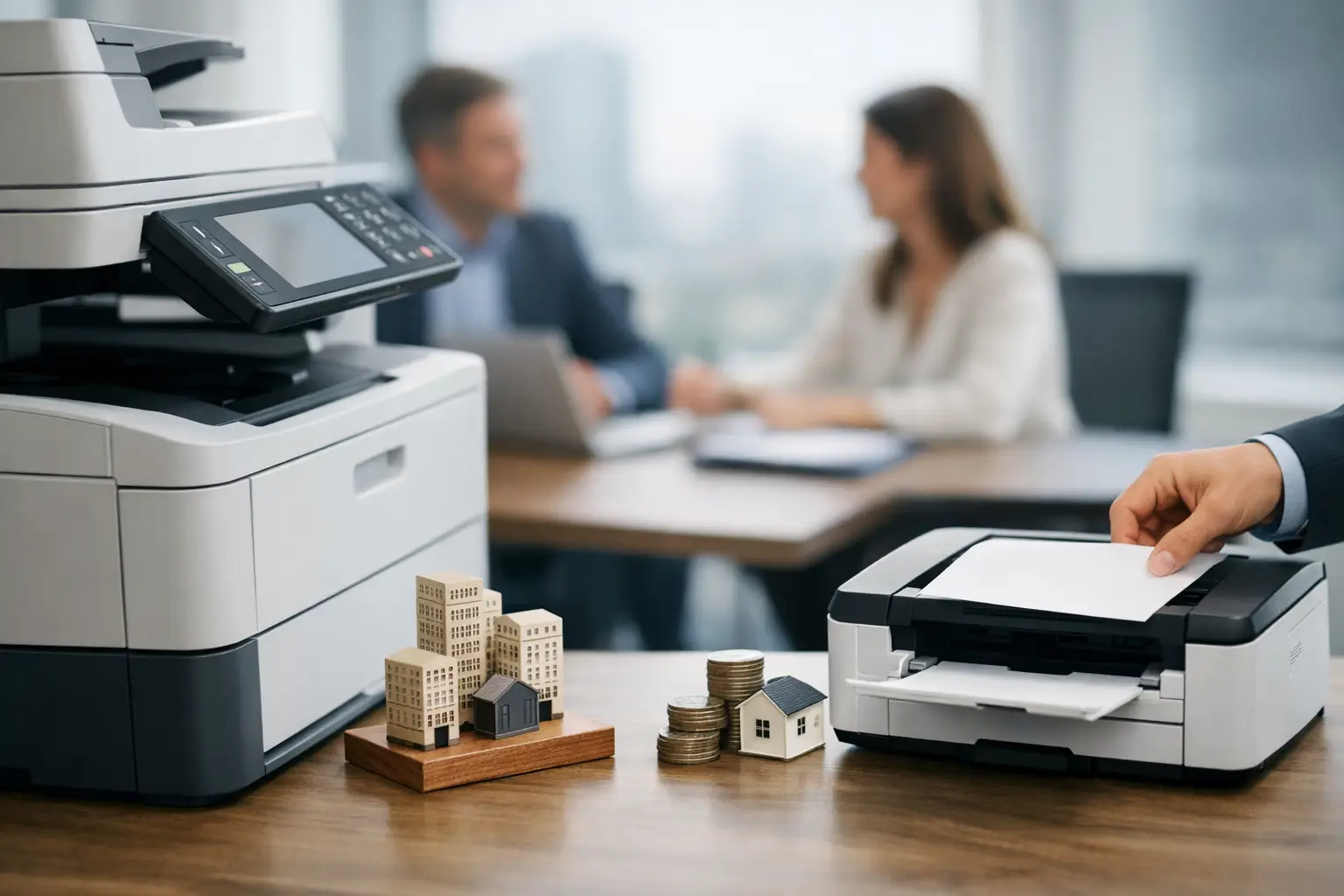
A finance team approves a new office printer, then six months later the print volume doubles, a project team moves on-site, and the original plan no longer fits. That is usually where the real question starts: printer leasing vs rental. For most businesses, the right choice is less about the machine itself and more about how long you need it, how predictable your usage is, and how much operational flexibility matters.
Printer leasing vs rental: the core difference
Printer leasing is generally a longer-term agreement. It is designed for businesses that want stable monthly costs over a fixed period, usually with a defined device selection, service terms, and usage expectations. Leasing often makes sense when printing is a regular business function and you want equipment that stays in place as part of your ongoing office setup.
Printer rental is usually shorter term and more flexible. It is commonly used for temporary offices, events, seasonal demand, project-based operations, or situations where a business needs a printer quickly without committing to a long contract. Rental agreements are often easier to adjust, extend, or end, depending on the supplier and service package.
On paper, both options can reduce upfront capital spending. In practice, they solve different business problems.
When leasing makes more business sense
Leasing is often the better fit when your print environment is predictable. If your office prints a consistent volume every month, your teams rely on shared multifunction devices, and procurement prefers fixed budgeting, leasing offers structure. You know what equipment you are getting, what the payment schedule looks like, and what service coverage is included.
This model is particularly useful for established offices, regional branches, schools, healthcare facilities, and administrative teams that cannot afford frequent equipment changes. In these cases, stability matters more than short-term flexibility.
A lease can also support better device standardization. If your business wants the same model or a controlled mix of devices across multiple departments, leasing helps create consistency in supplies, servicing, user training, and fleet management. That can reduce internal IT burden and simplify support.
The trade-off is commitment. If your printing needs drop sharply, your team relocates, or your business changes direction, a lease may be harder to adjust without fees or contract revisions. Leasing works best when the business has reasonable confidence in its future needs.
Cost predictability under a lease
For many procurement and operations teams, monthly predictability is a major advantage. Rather than making a large one-time purchase and separately managing repairs, toner, and maintenance, a lease often rolls costs into one agreement. That can make planning easier and reduce surprise service expenses.
Still, low monthly pricing should not be viewed in isolation. It is worth checking what is actually included. Some lease agreements cover maintenance and service response but charge separately for consumables. Others include a print allowance, with overage fees once usage passes a set threshold. The better the contract matches your real print volume, the better the financial outcome.
When rental is the smarter option
Rental is usually the stronger choice when time is short or demand is uncertain. If you need a printer for three weeks, three months, or a temporary branch office, rental avoids locking the business into a longer obligation than necessary.
This is especially relevant for construction sites, training centers, exhibitions, audits, pop-up offices, or contract-based teams. In those settings, speed of deployment and ease of return often matter more than long-term financing terms.
Rental also helps when your print requirements are still evolving. A growing business may not yet know whether one department needs a basic printer or a high-volume multifunction copier. Renting allows you to test actual usage before making a longer commitment.
That flexibility has value, but it can come at a higher monthly rate compared with leasing over a longer term. Rental is efficient when you need convenience and shorter obligations. It is not always the cheapest route if you end up keeping the same machine for years.
Why rental appeals to fast-moving operations
Operationally, rental removes friction. Businesses can often source a device quickly, use it for the required period, and return or replace it with minimal disruption. If a project expands, the supplier may be able to scale the device specification or add units without rebuilding the entire arrangement.
For companies managing temporary teams or variable workloads, that flexibility can be more valuable than a lower long-term monthly cost. A printer that arrives on time, works reliably, and includes support can protect productivity in ways that matter far beyond the invoice total.
The service question matters as much as the contract
Too many comparisons focus only on lease length and monthly price. In real business use, service support often determines whether the agreement delivers value.
If a printer goes down in a busy office, the cost is not just technical. Teams lose time, invoices wait, documents pile up, and internal support gets pulled away from other tasks. That is why businesses should review response times, maintenance coverage, replacement options, consumables management, and on-site support before deciding between lease and rental.
A rental with strong service support may be more effective than a cheaper lease with weak maintenance terms. The opposite can also be true. What matters is how well the supplier supports uptime.
For businesses looking at wider print control, managed service options can also change the decision. If your provider can combine the device, maintenance, supplies, and print monitoring into one service model, the lease-versus-rental question becomes part of a larger operational strategy rather than a standalone equipment choice.
How to compare printer leasing vs rental fairly
A fair comparison starts with your usage horizon. If you clearly need the device for less than a year, rental is often the practical choice. If the printer will be part of your office setup for several years, leasing is usually worth evaluating first.
Next, look at volume. Businesses with high, stable print volumes tend to benefit more from structured lease agreements. Businesses with unpredictable usage often benefit from rental flexibility, even if the monthly cost looks higher.
Then review what happens if your needs change. Can you upgrade the machine? Add another device? End the agreement early? Move the device to another location? These questions are not minor details. They affect total cost and operational fit.
It also helps to examine the full service package instead of only the hardware line item. Delivery, installation, user setup, maintenance, toner support, remote diagnostics, and replacement response all influence the actual business value of the arrangement.
Common scenarios and the better fit
A corporate office with steady document workflows usually benefits from leasing. The business gets predictable costs, standardized equipment, and a service framework that supports ongoing operations.
A short-term project office usually benefits from rental. The company avoids tying a temporary need to a multi-year contract and can return the equipment when the project ends.
A growing small business can go either way. If growth is steady and the office setup is stabilizing, leasing may support better long-term cost control. If headcount, location, or usage is still shifting, rental may be the safer short-term move until requirements are clearer.
Multi-site businesses should also think beyond the single device. If one location needs a short-term printer while headquarters needs a long-term fleet plan, the right answer may include both models. A provider with sales, rental, and managed support capabilities can structure around the business rather than forcing one contract type everywhere.
The decision is really about operational fit
Printer leasing vs rental is not a question with one universal winner. Leasing is stronger when your business values consistency, fixed budgeting, and long-term device placement. Rental is stronger when you need speed, flexibility, and a shorter commitment.
The better choice depends on how your organization works today and how likely that will change over the next year or two. If your print environment is stable, leasing often delivers stronger planning and cost control. If your needs are temporary or uncertain, rental protects flexibility and reduces commitment risk.
For businesses that want one partner across equipment supply, service support, and broader office technology needs, Kayan Solutions can align the print setup with the way the business actually operates, not just the way a contract is priced.
A good printer agreement should do more than place a machine in the office. It should support productivity, reduce interruptions, and stay aligned with how your business grows.


Add comment